01
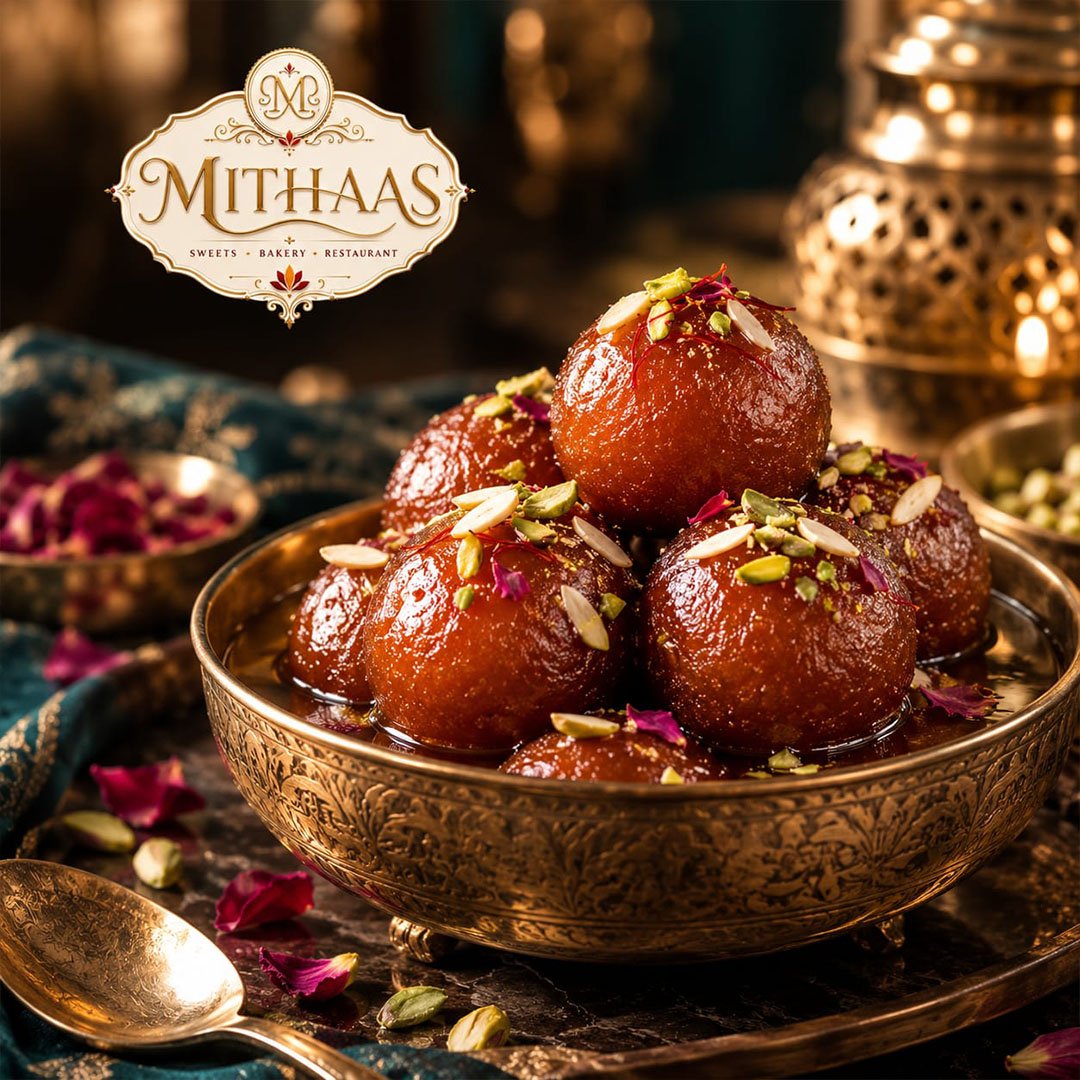
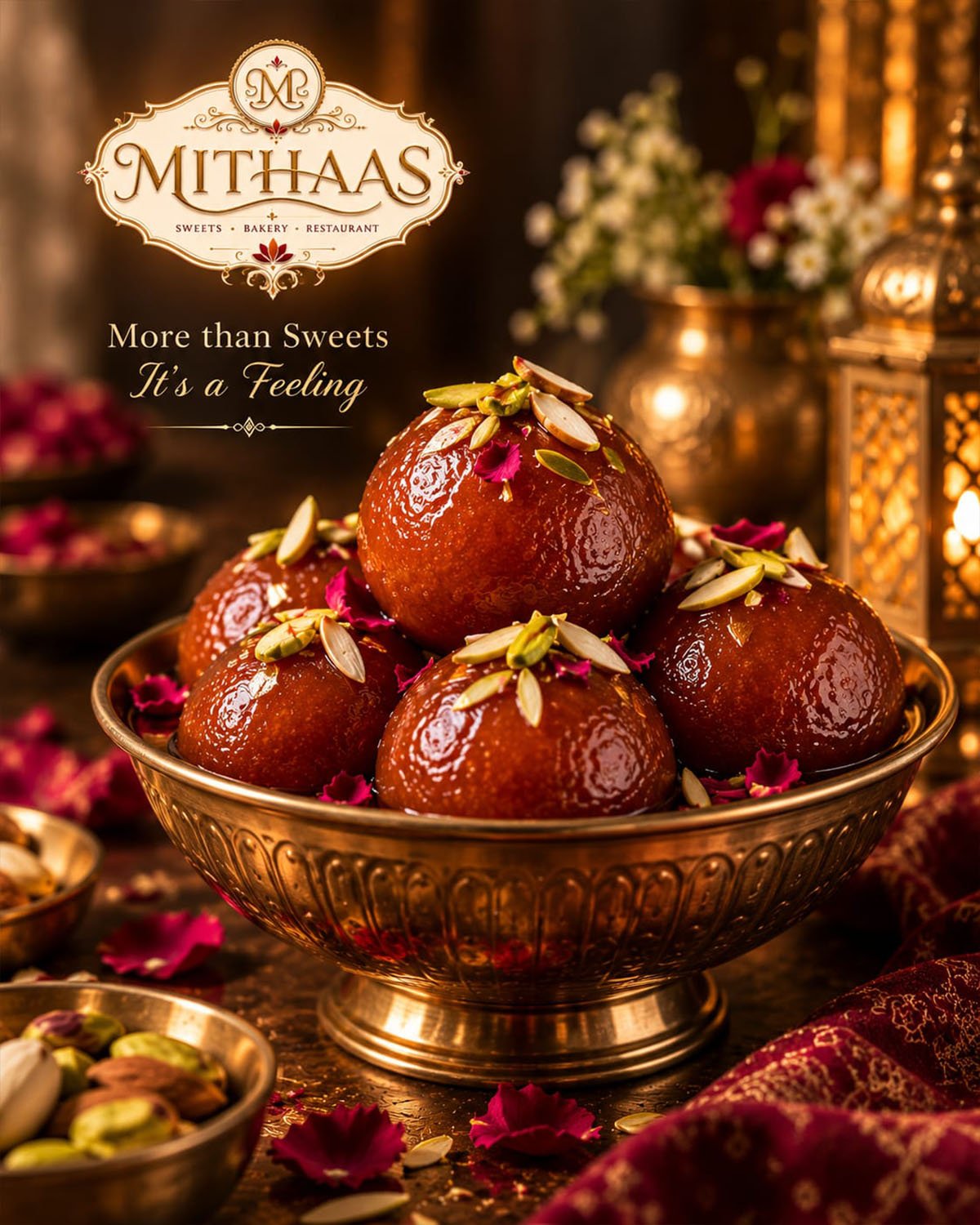
Gulab Jamun
Soft, warm, and soaked right through with cardamom syrup.

Beautifully crafted sweets, freshly baked favourites and flavours made for every occasion.
Sweets · Bakery · Restaurant
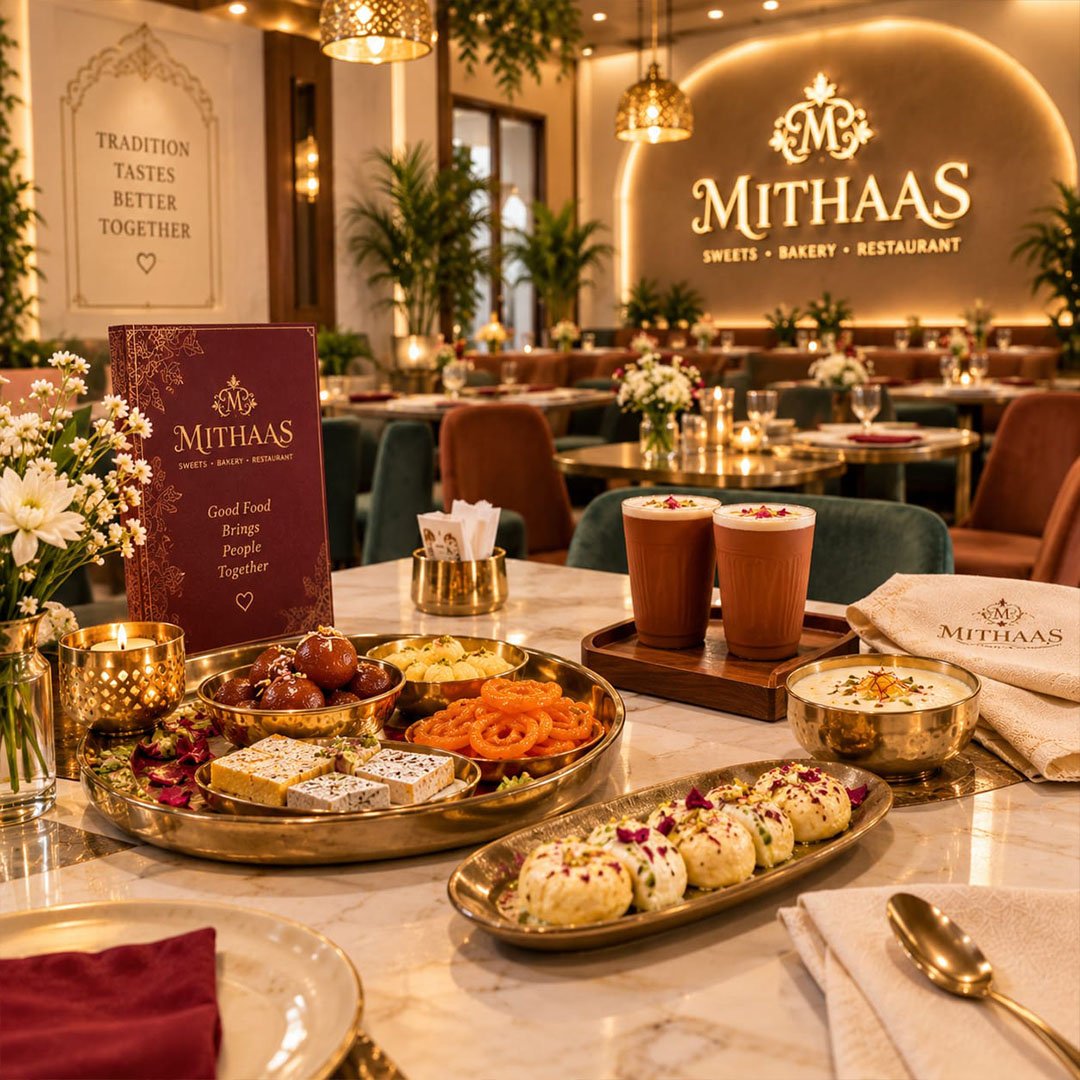
Three counters. One address. Whatever the occasion asks for.
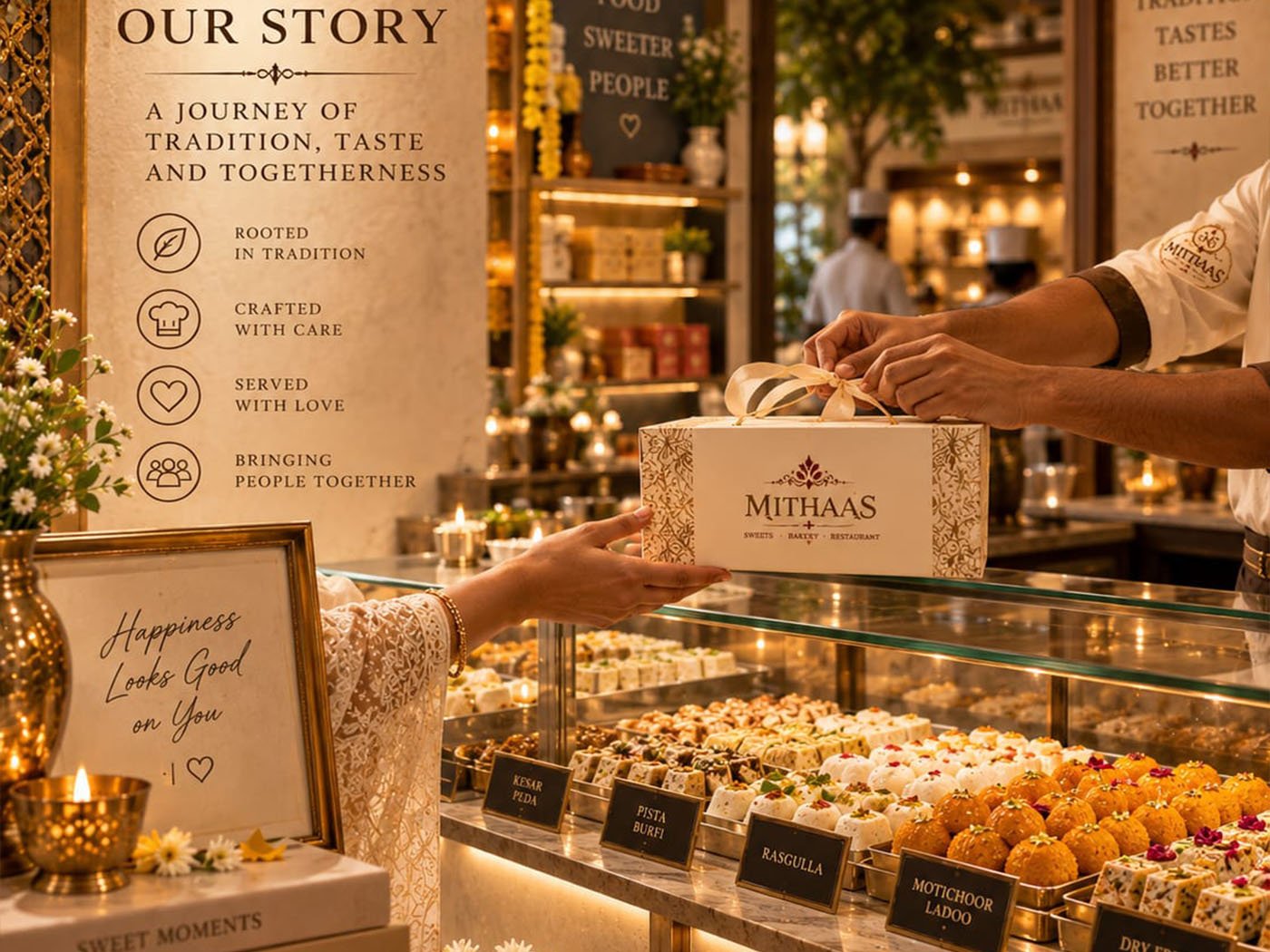
Our Story
Nobody remembers the box. They remember who brought it, and what the house smelled like when it was opened.
That is really the whole business. A card arrives, a result comes through, someone gets married, someone comes home after a long time away — and before anyone says anything sensible, somebody is sent out for mithai. We have been on the other end of that errand for a while now, and we take it seriously.
So the kadhai goes on early. Chhena is set, khoya is stirred down, the oven is warm by the time the shutters go up. Through the day the counter is refilled rather than stocked once, because a laddoo made at four in the afternoon is a different thing from one made at six in the morning. In the kitchen behind it, dal sits on a low flame, dosa batter finishes fermenting, and lunch begins.
We would rather make less of something and make it properly.
Signature
01
Soft, warm, and soaked right through with cardamom syrup.
02
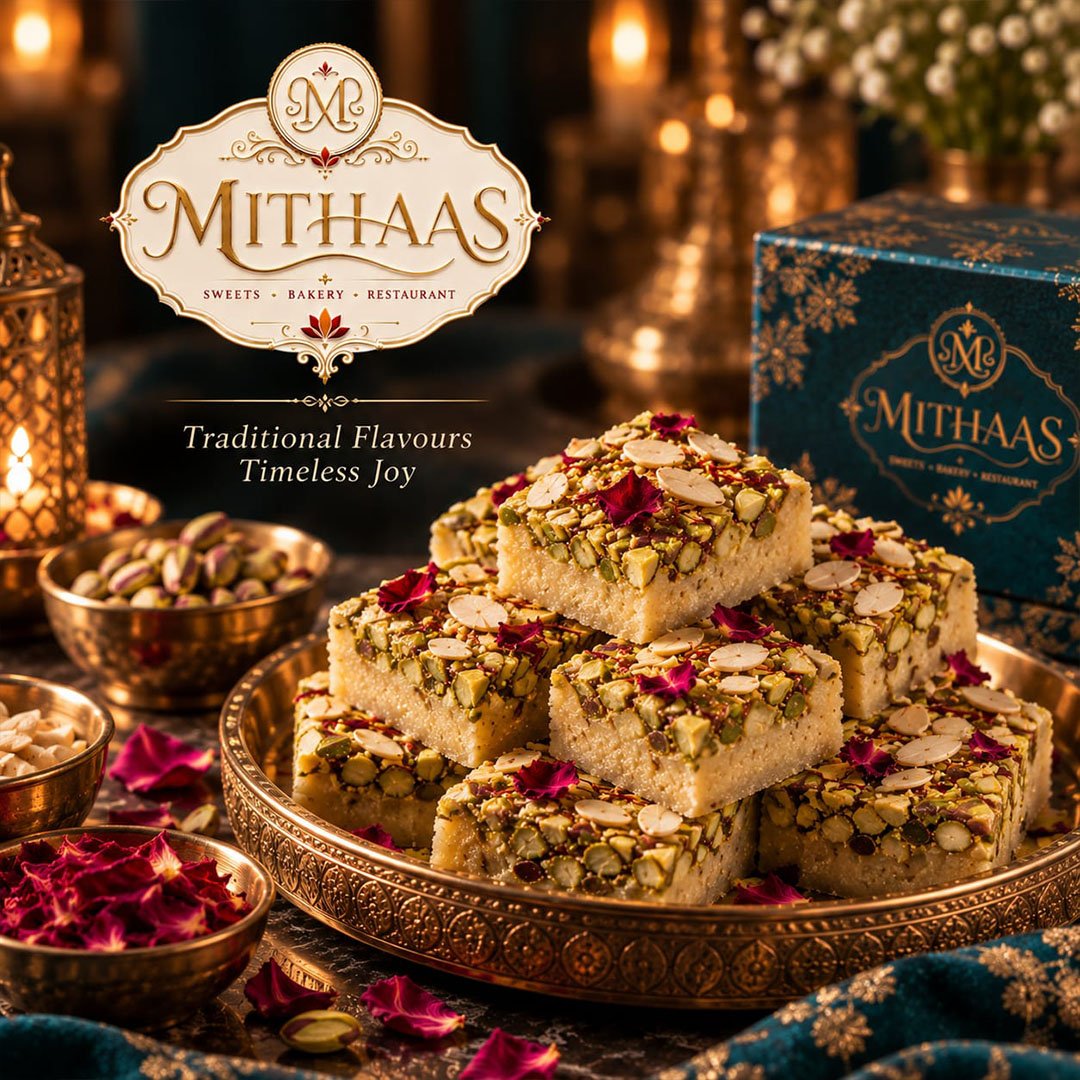
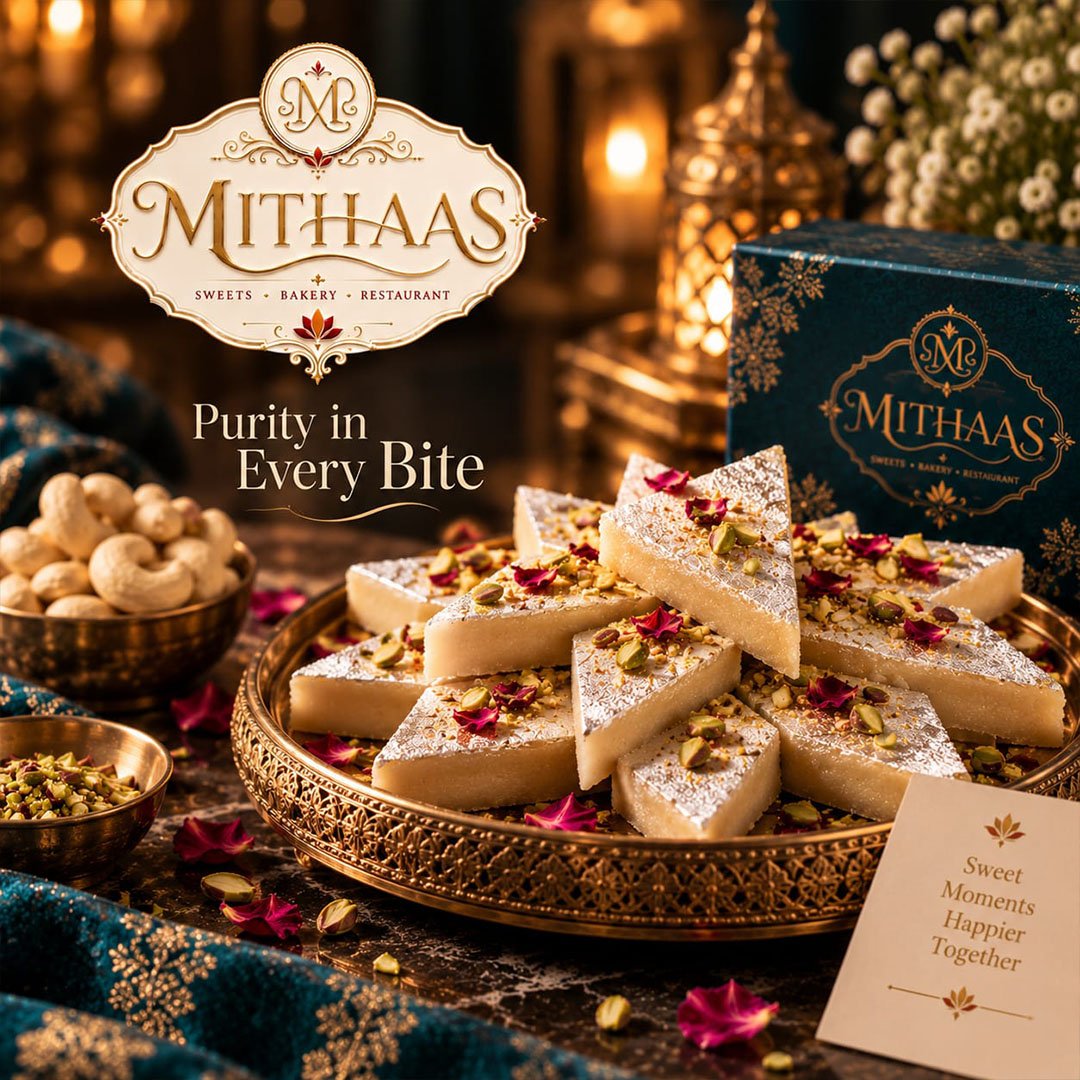
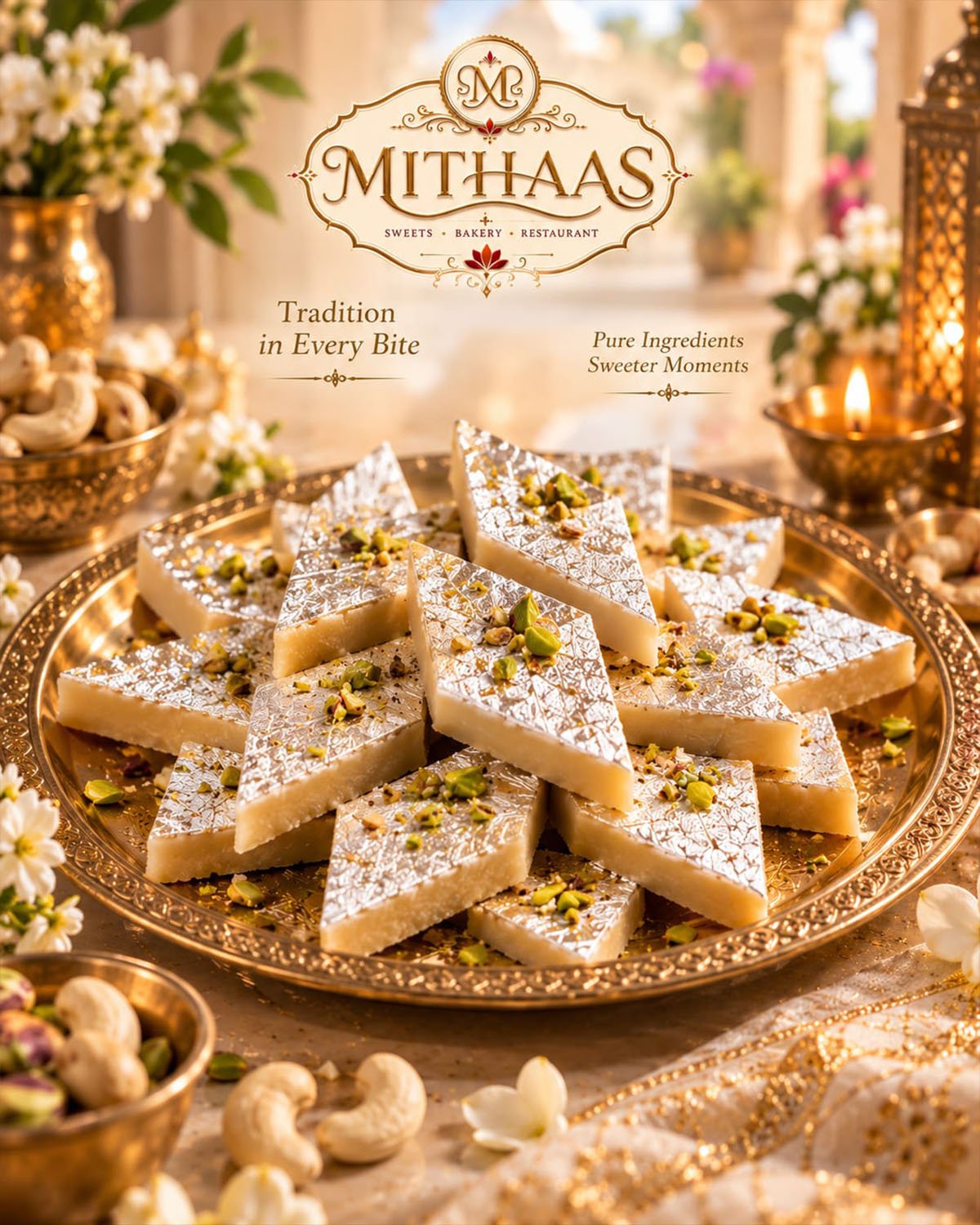
Thin diamonds of cashew and sugar, finished with silver leaf.
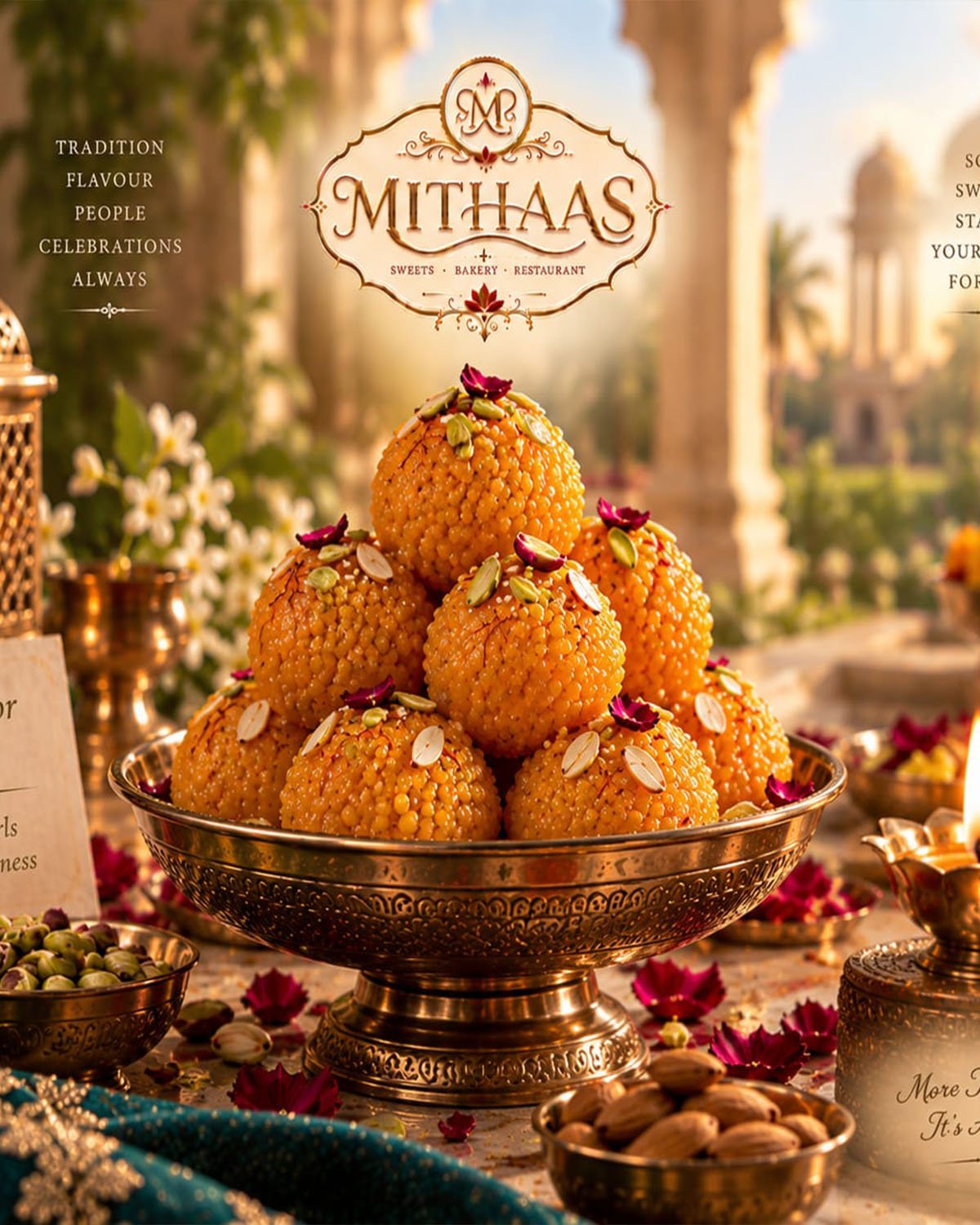
03
Tiny pearls of boondi pressed into a laddoo that gives way at first bite.
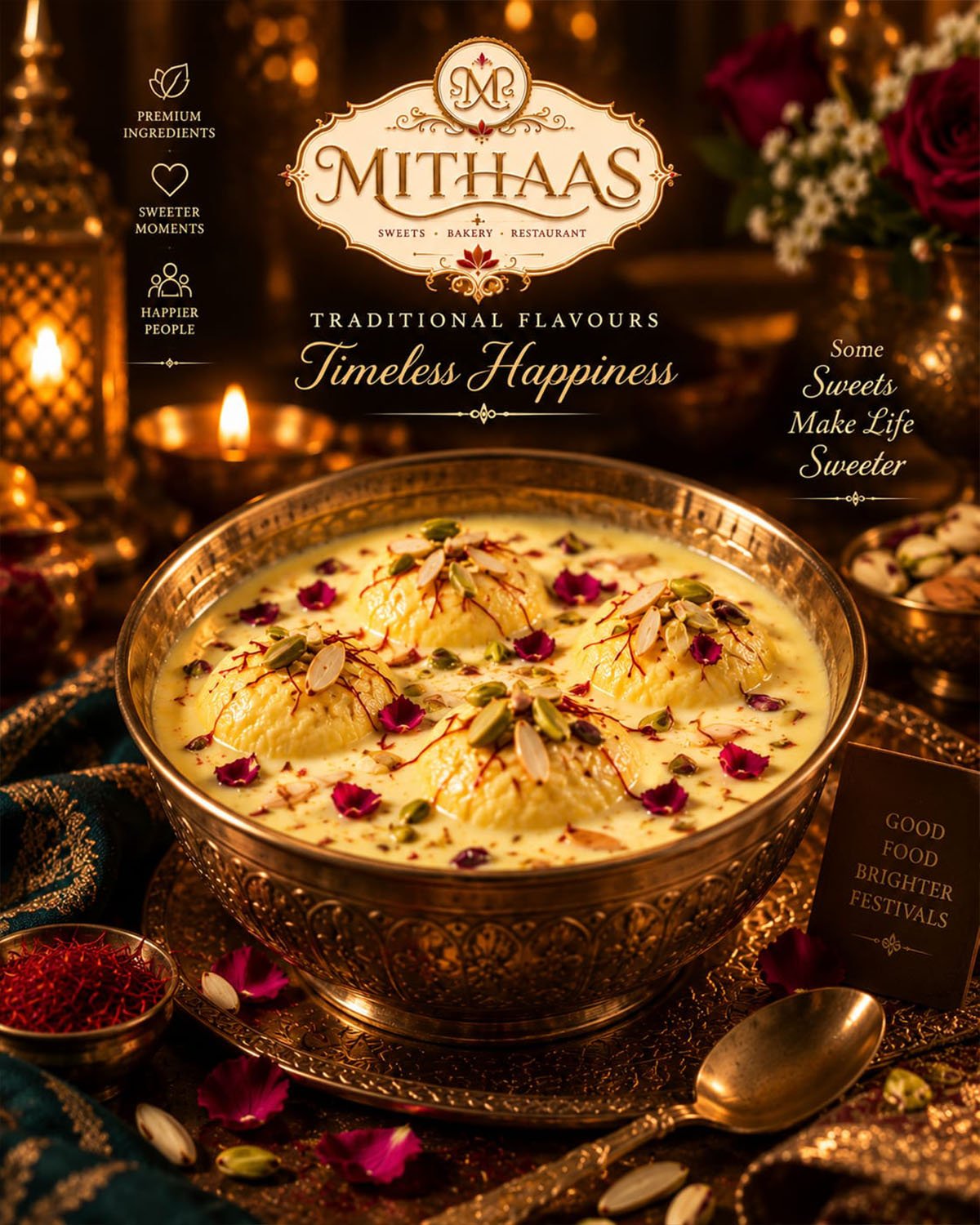
04
Chhena discs resting in thickened, cardamom-scented milk.
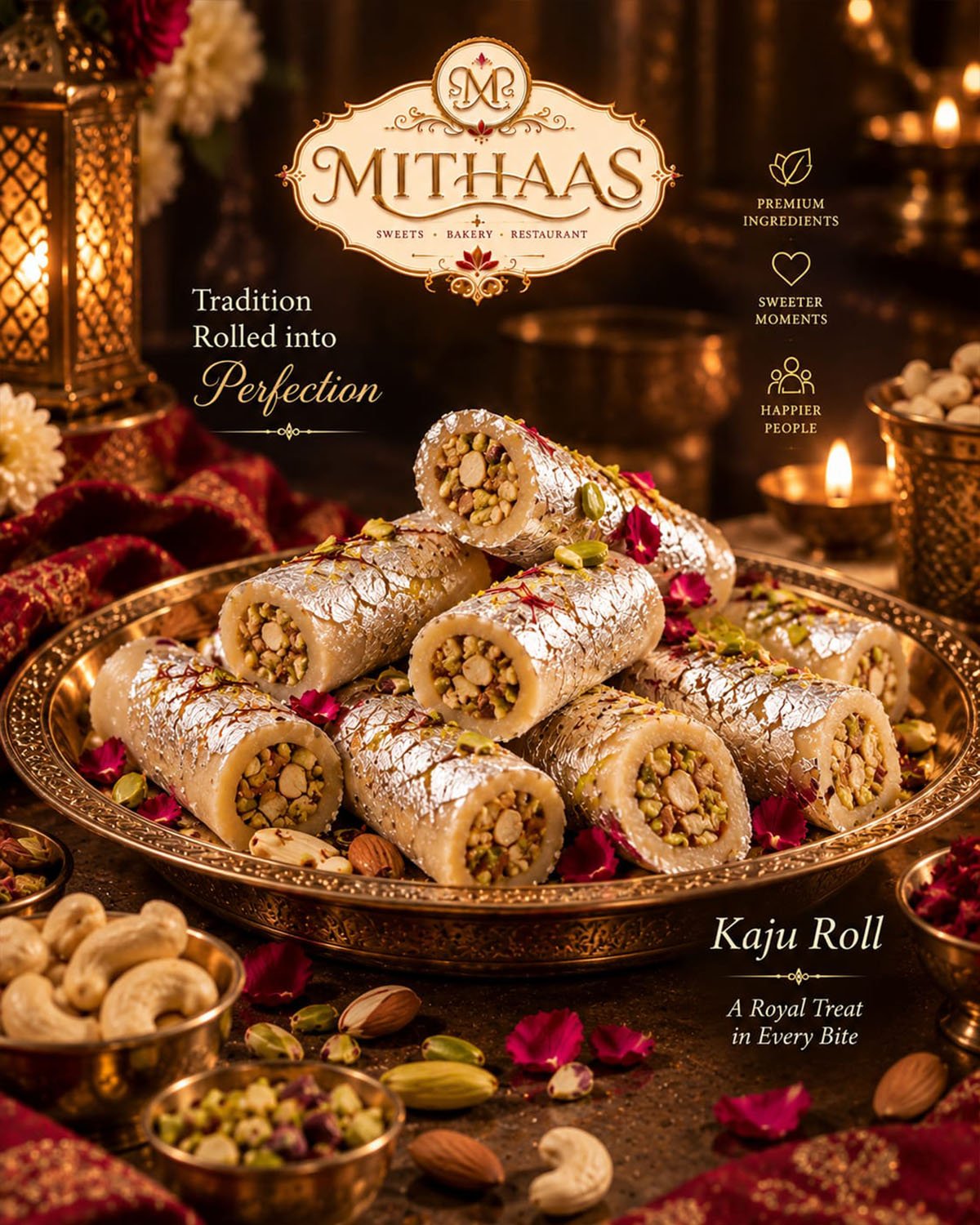
05
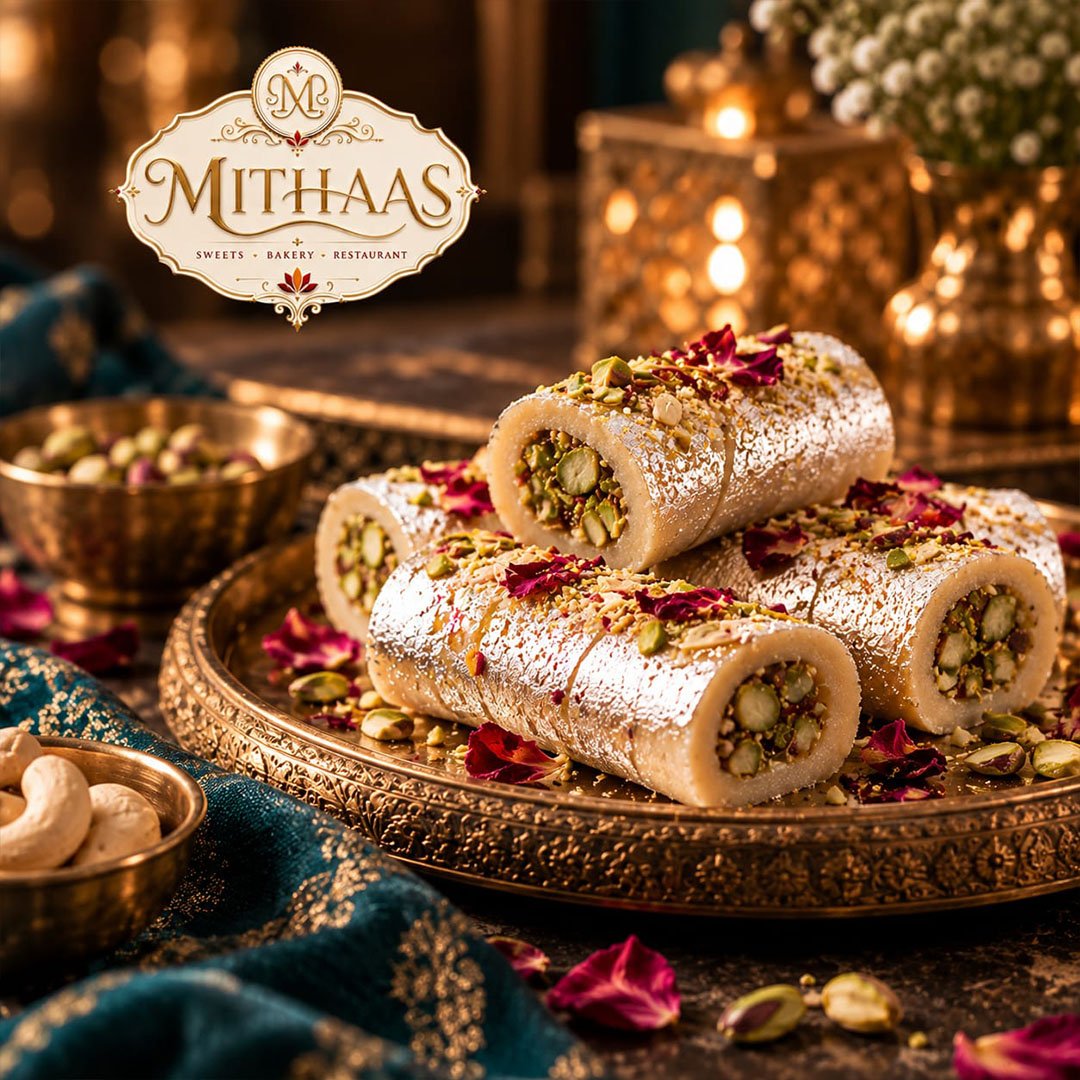
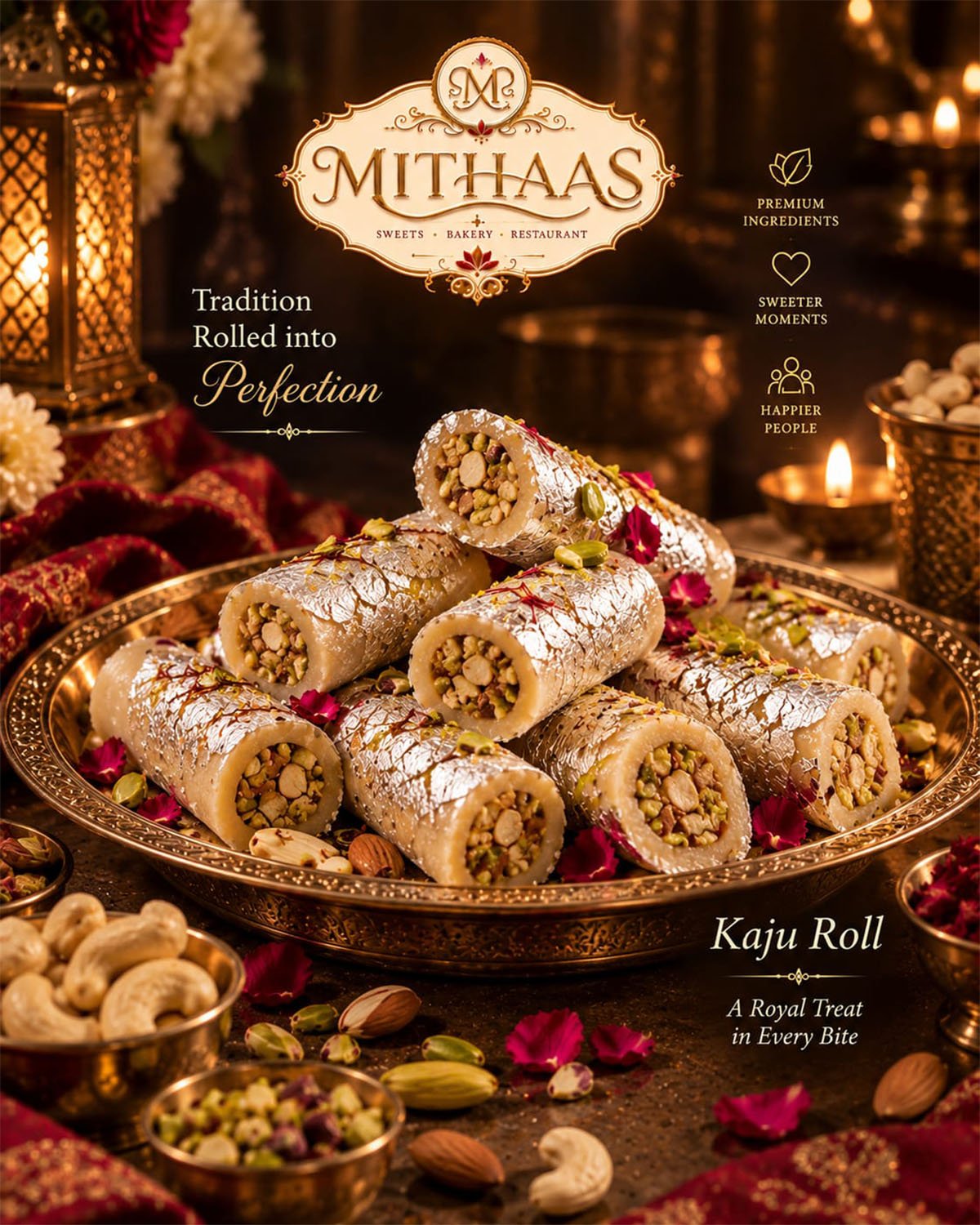
Cashew wrapped around a fig centre, sliced thin.
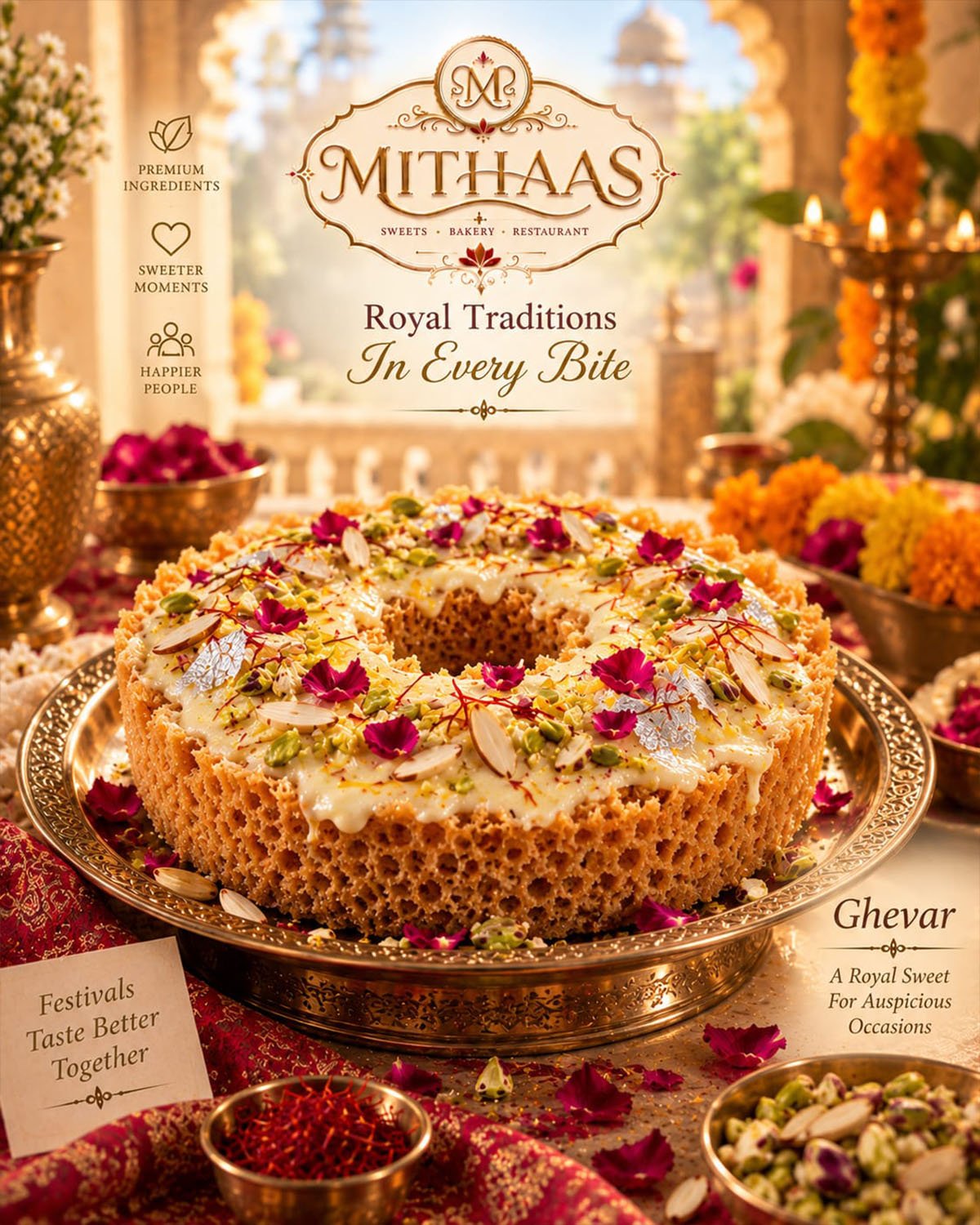
06
The monsoon disc of lace-thin batter, soaked and topped with malai.
The Sweet Counter
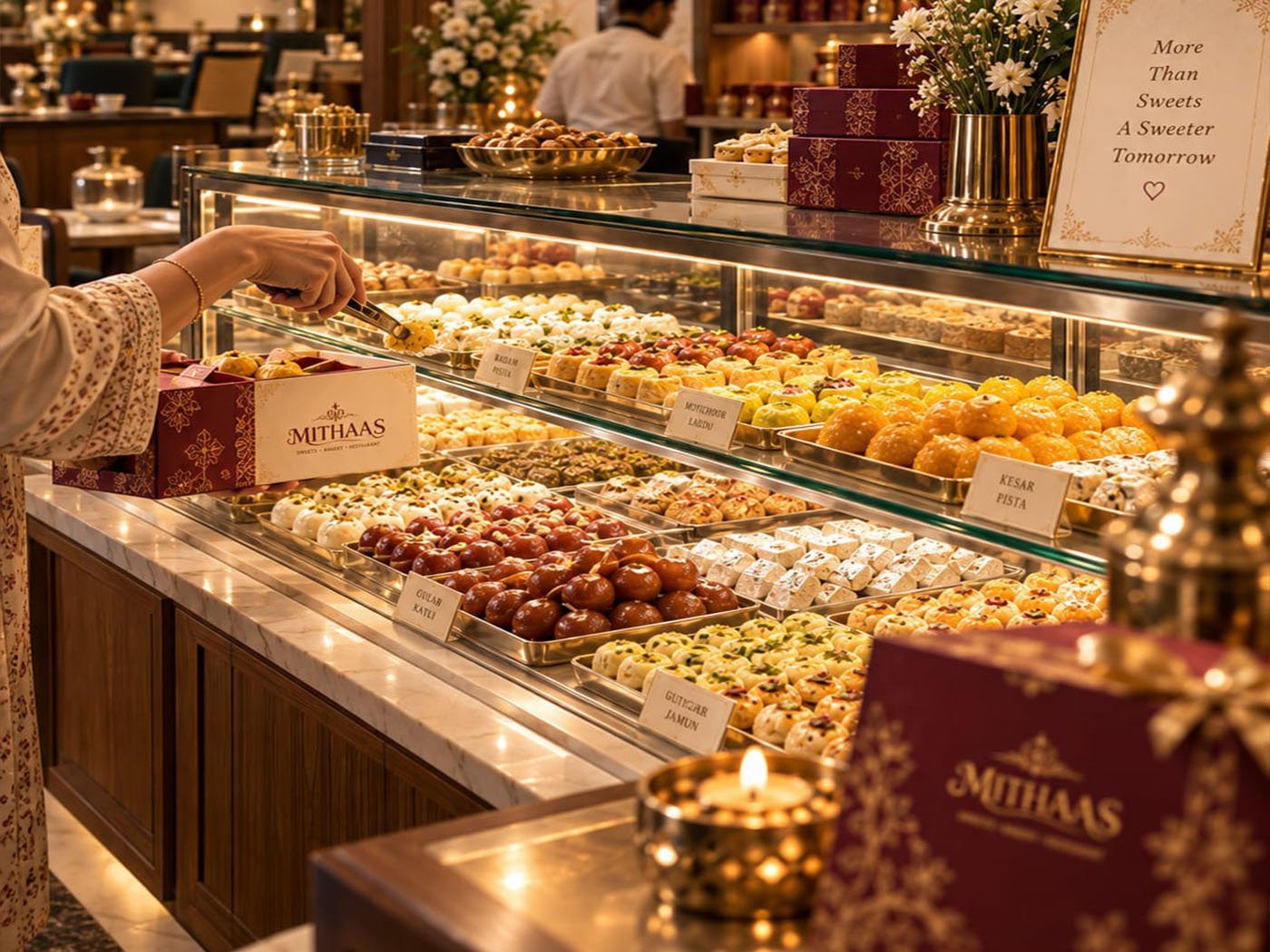
Everything is sold by weight, packed while you wait, and boxed properly if it is going somewhere.
01
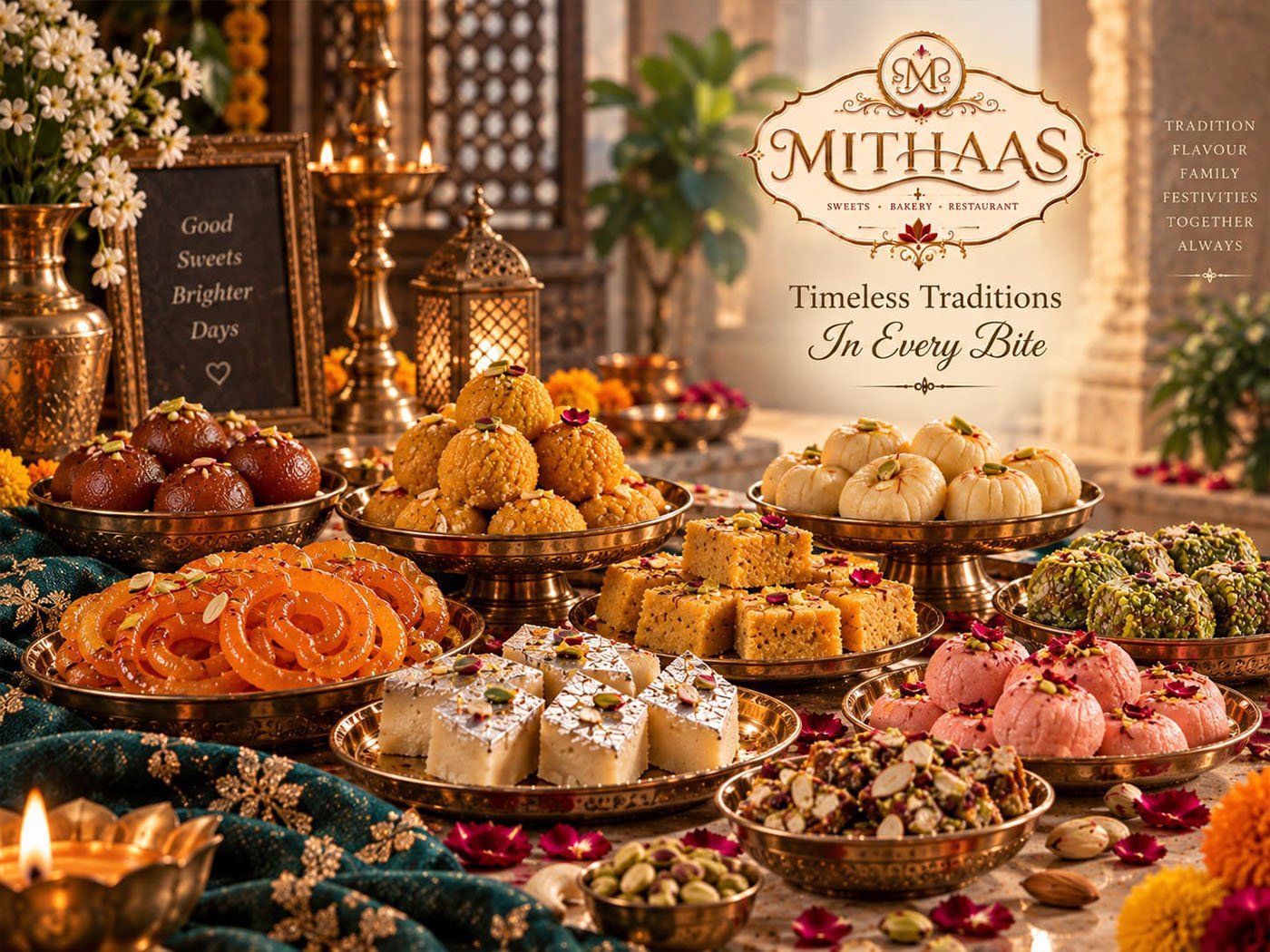
Gulab jamun, laddoo, burfi, jalebi — the sweets that turn up at every festival, every exam result and every ordinary Tuesday that needed improving.
02
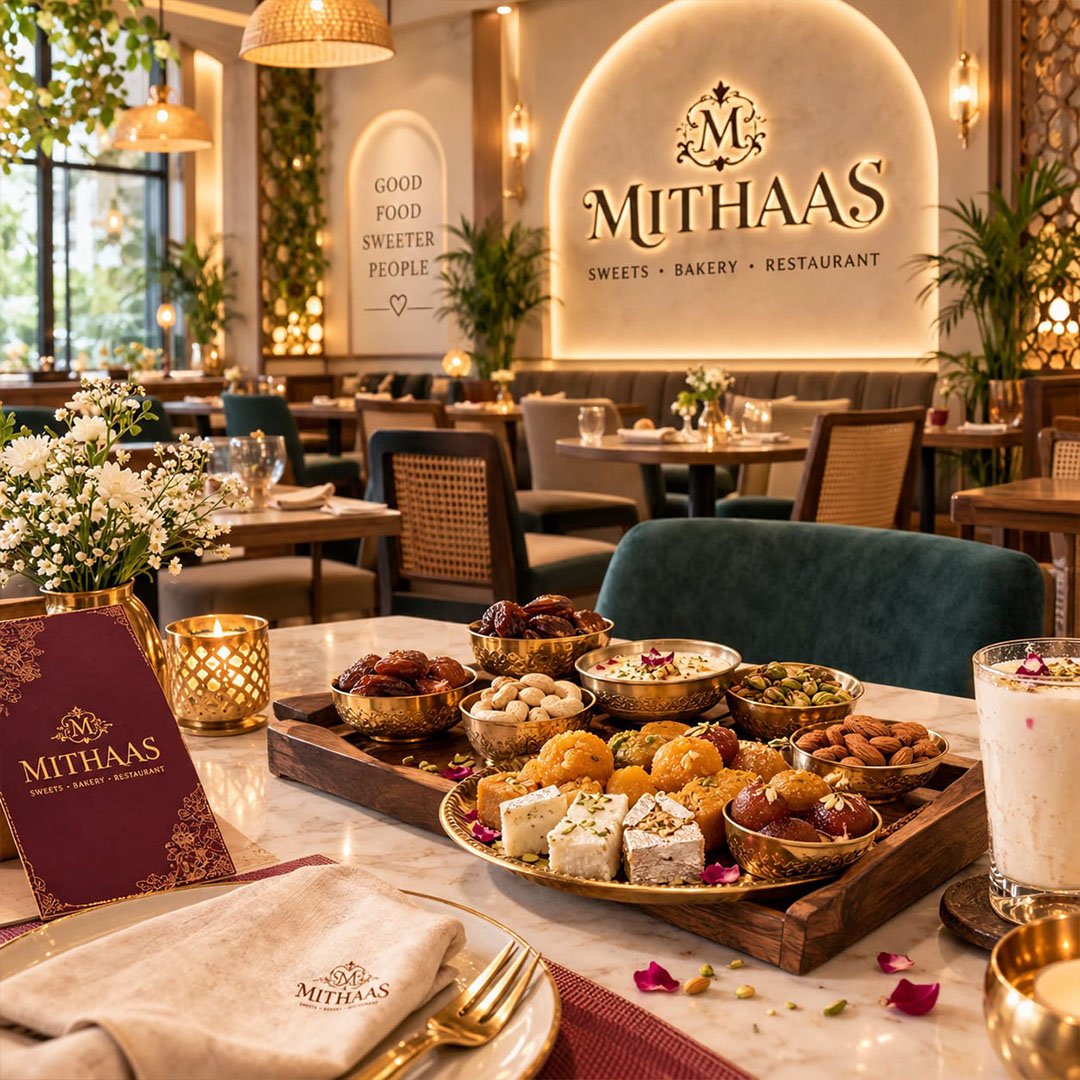
More dry fruit, more patience, and a box that looks like it means something. These are the ones that go out for weddings and Diwali.
03
Ghewar from Rajasthan, petha from Agra, mysore pak from the south. India makes sweets differently in every direction, and we've learned a few of them.
04
Gajar halwa when the carrots are red, ghewar through the monsoon, thandai at Holi. Some things are worth waiting for.
The Bakery
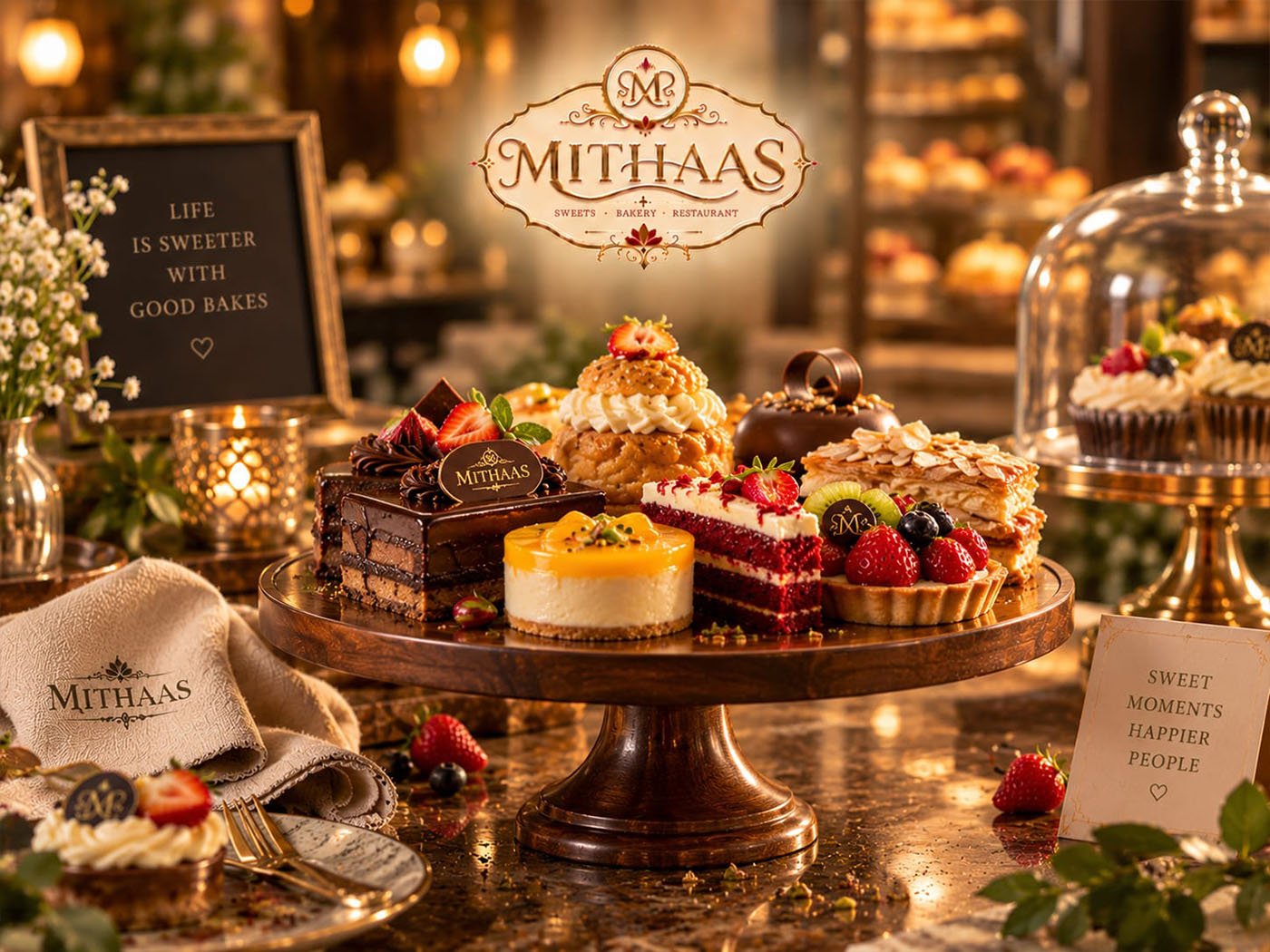
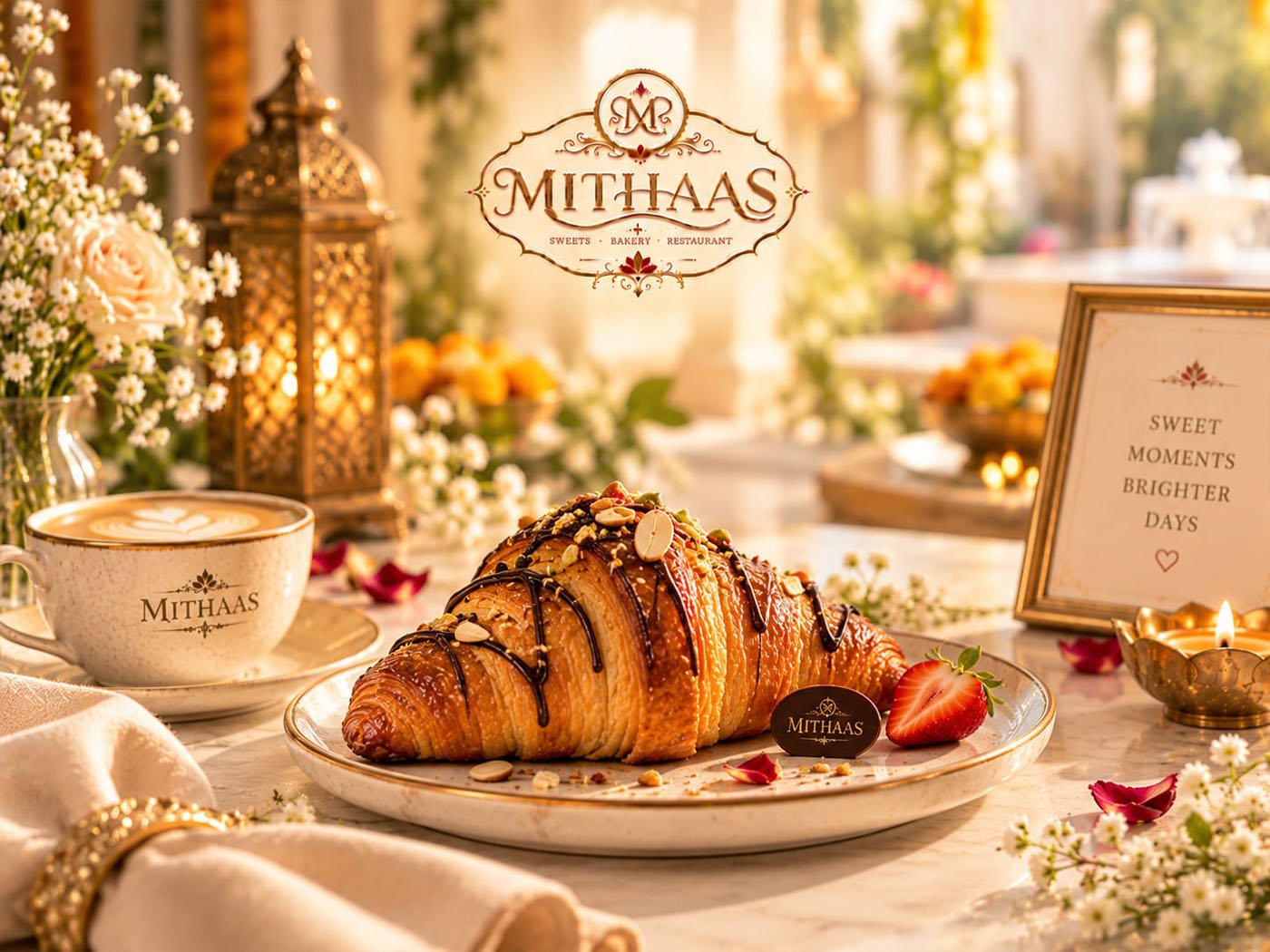
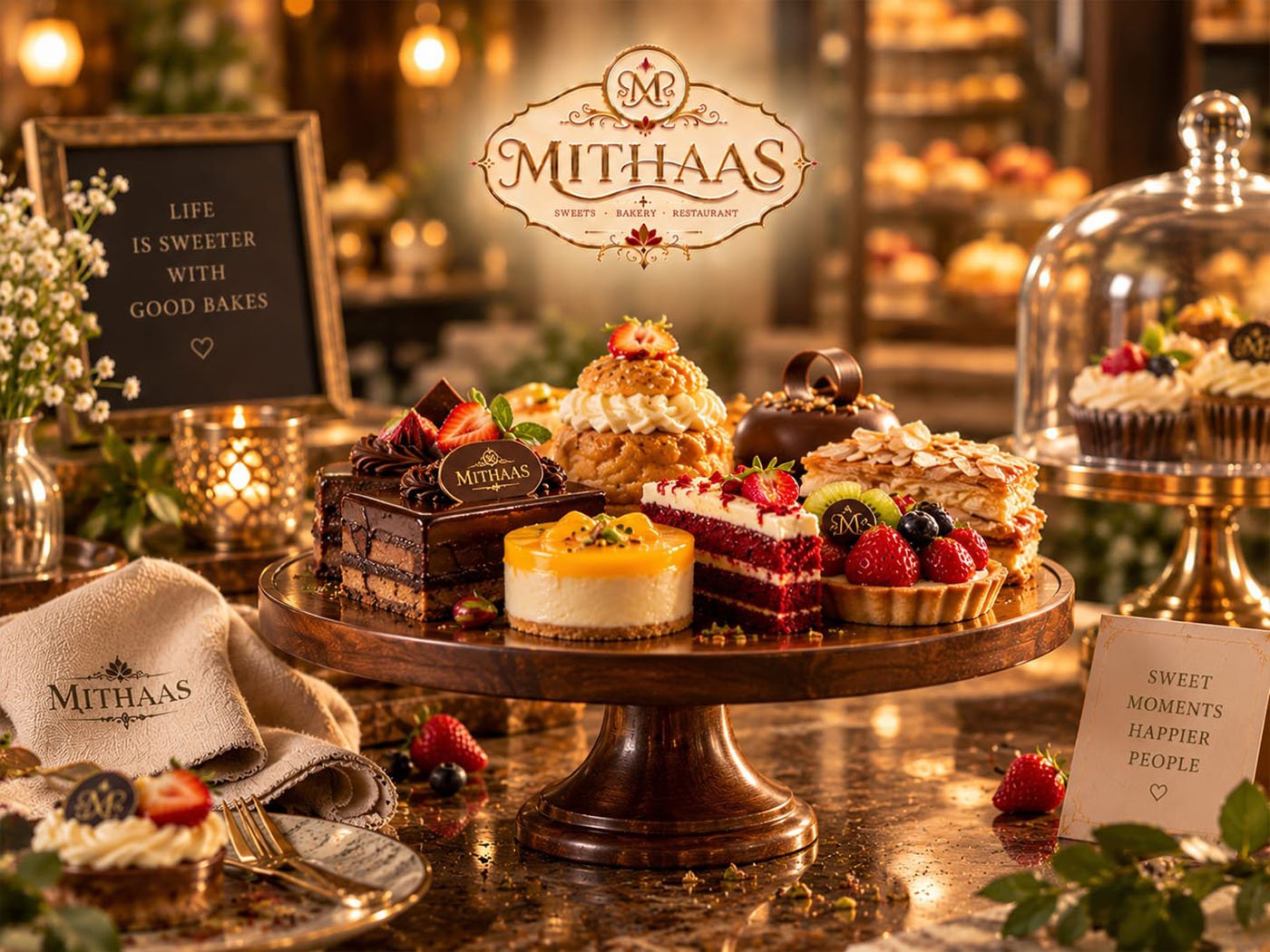
The oven starts before the shop does. Bread and cookies come out first, cakes through the morning, and by evening there is usually not much left to argue over.
The Restaurant
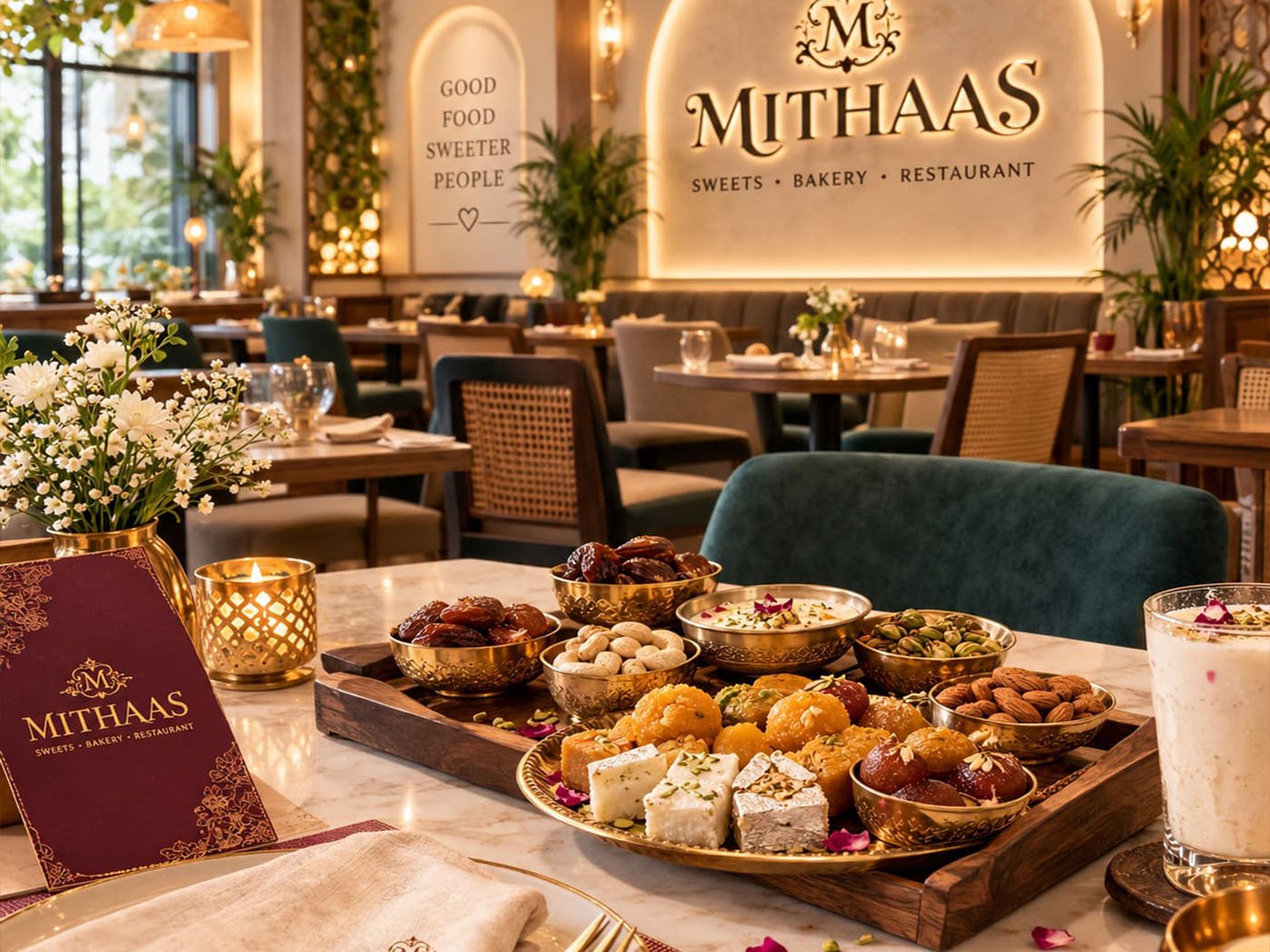
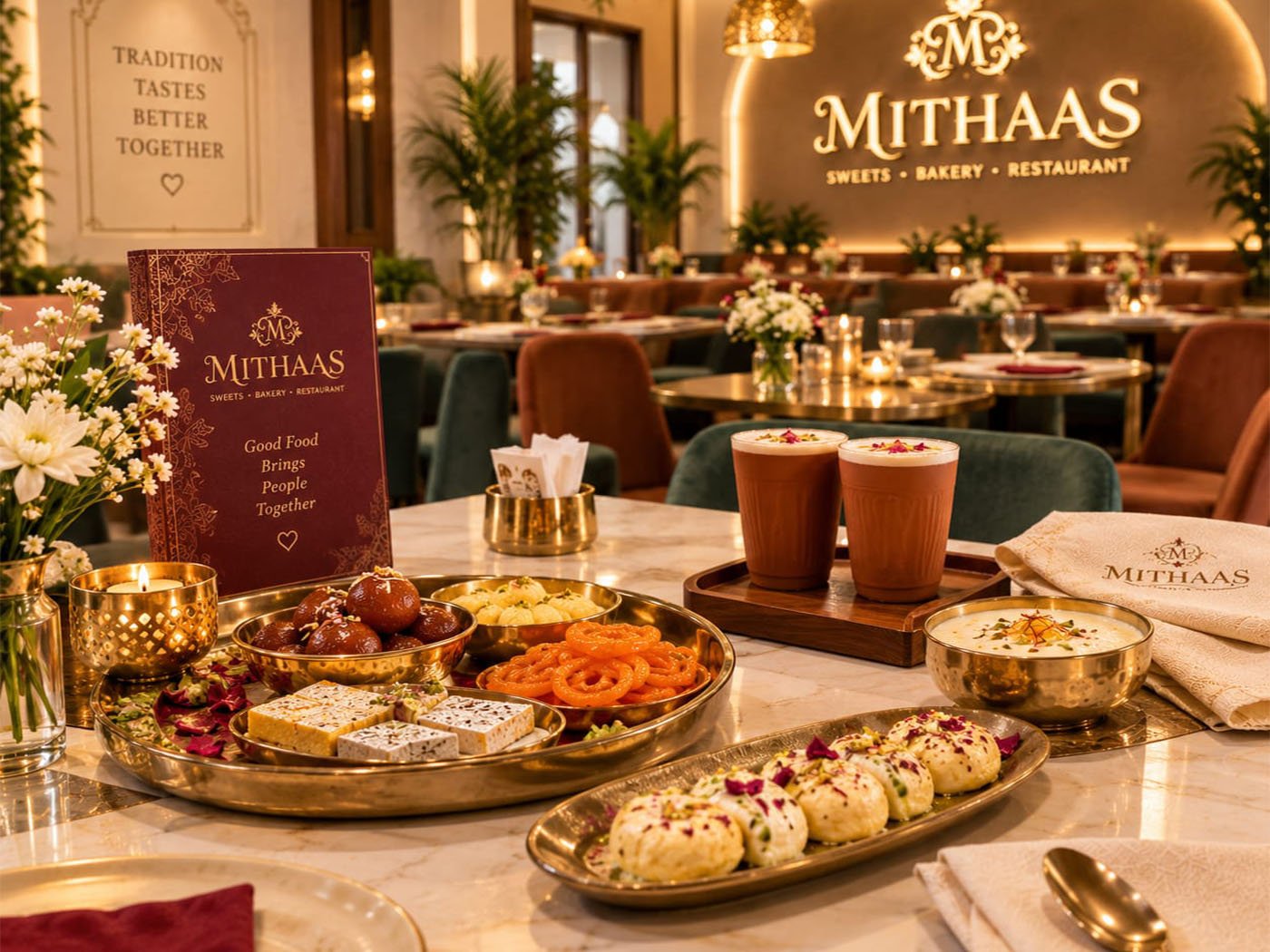
Past the sweet counter there is a proper kitchen, and it is busier than most people expect. Breakfast is dosa and idli. Lunch is thali. By evening it is chaat at the front, noodles in the wok, and somebody's birthday cake coming out of the fridge.
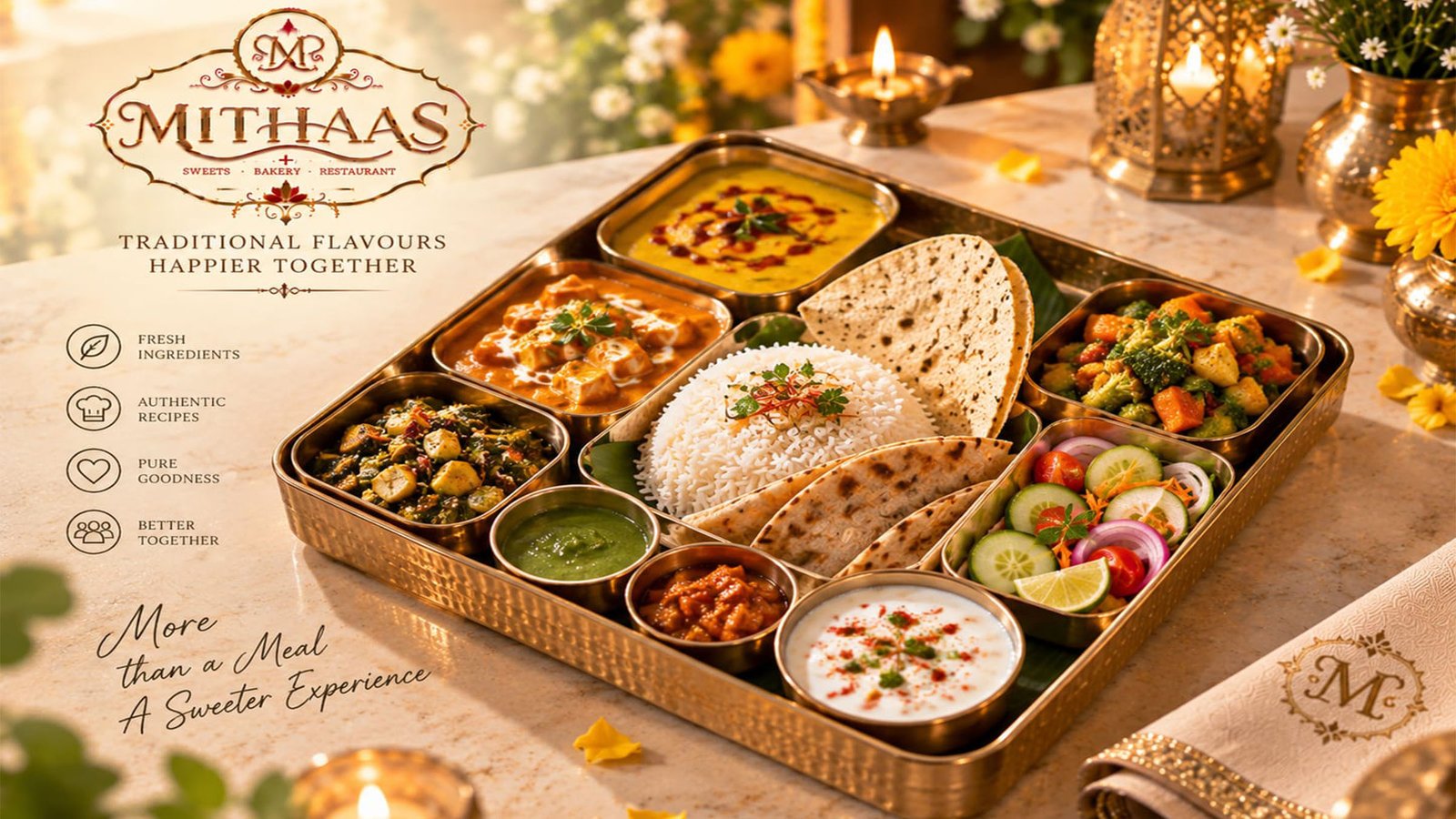
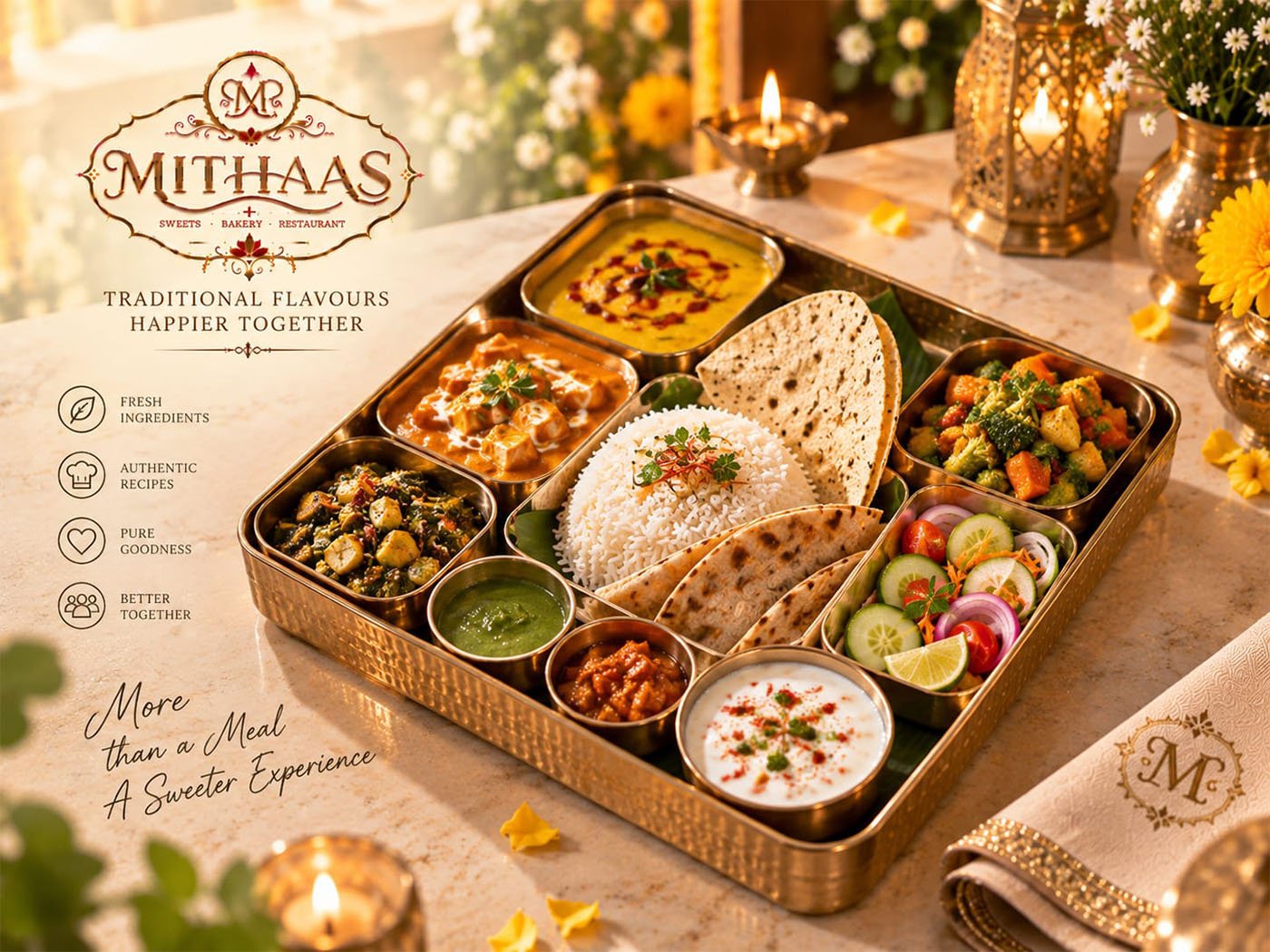
Paneer and dal cooked to order, breads off the tandoor, rice, raita and a full thali.
Batter ground in-house and left overnight, which is the whole difference.
The chaat counter at the front, assembled while you watch.
Cooked hot and fast in a wok. Dry or gravy, your call.
Chai boiled properly, lassi in a tall glass, shakes for the afternoon.
Falooda, kulfi, and hot gulab jamun with cold vanilla.
The Menu
Eleven sections, searchable, and built to be read on a phone while you are deciding.
Gifting & Celebrations
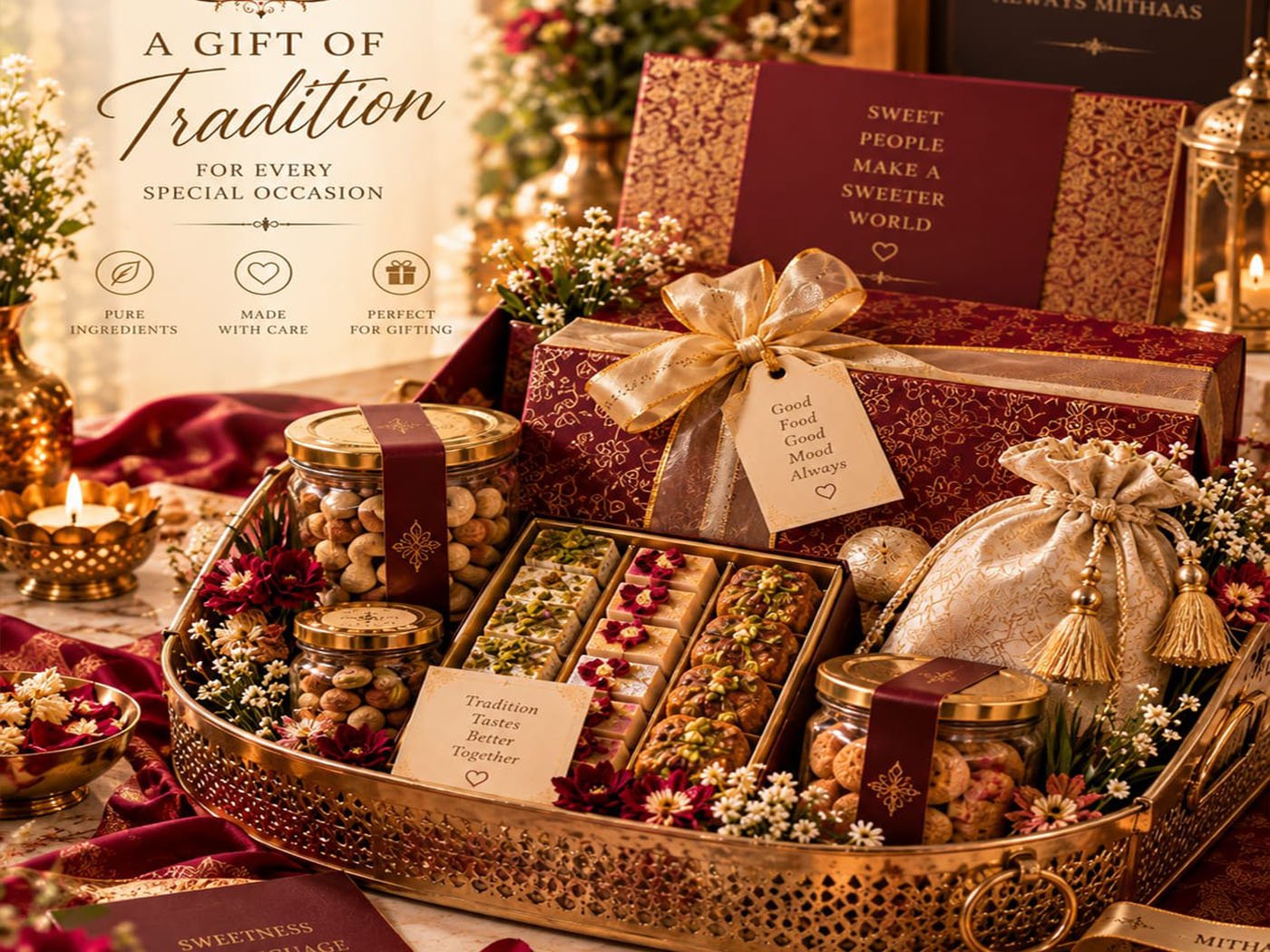
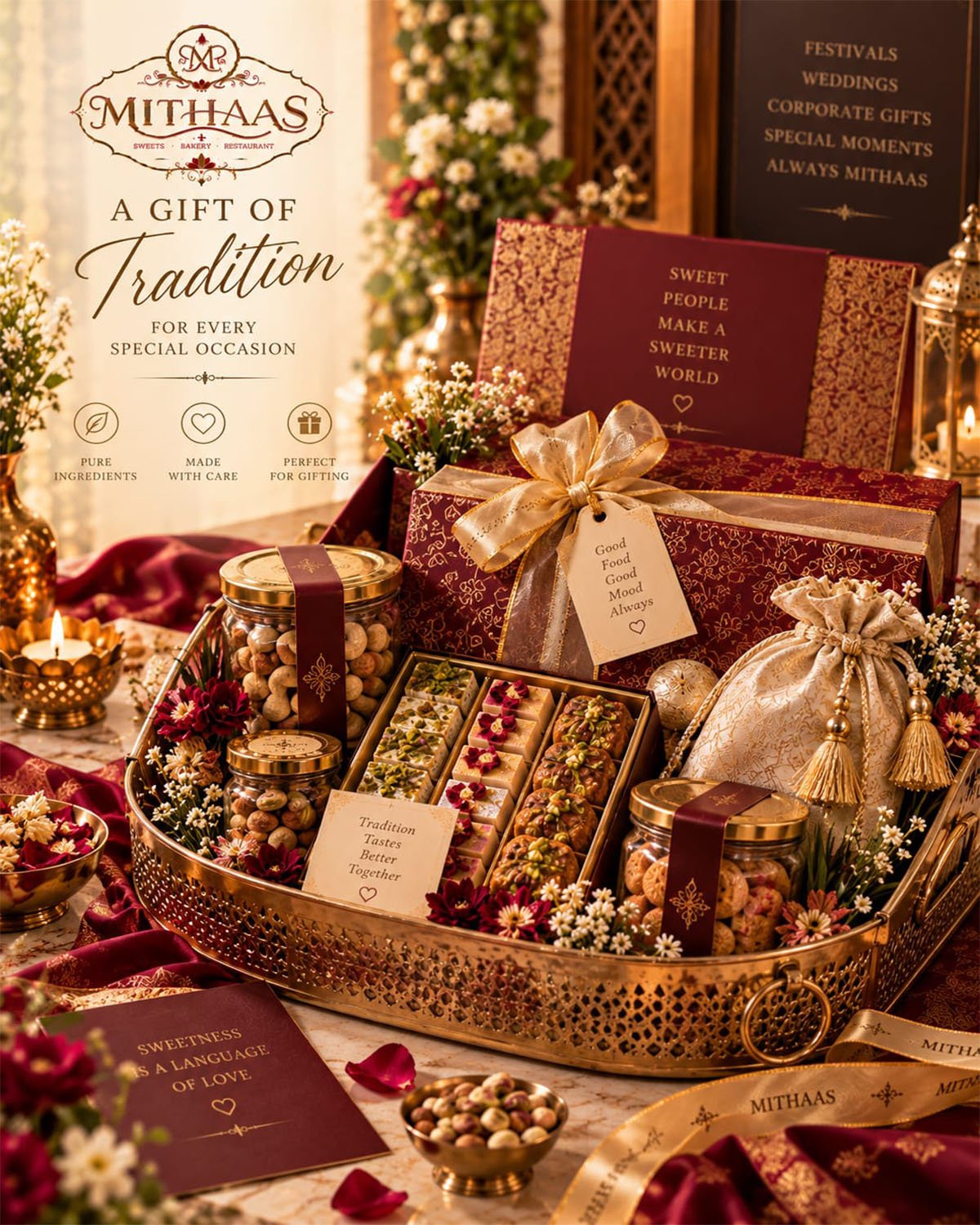
Diwali boxes that go out by the dozen. A tray for the office on somebody's last day. Five kilos of laddoo for a wedding, packed the night before so it is ready when the cars leave.
Tell us the occasion, roughly how many people, and what you would like to spend. We will put something together and you can taste it before you commit to it.
Why Mithaas
01
Sweets are made in small batches through the day, not once in the morning. What you take home was almost certainly made a few hours ago.
02
Dal makhani sits on low heat overnight. Dosa batter is ground and left to ferment. Some things can't be hurried, so we don't.
03
A box of mithai, a birthday cake, and dinner for four — without driving to three different places.
04
The counter staff know most faces and remember most orders. That's not a policy, it's just how it happens.
Gallery
In Their Words